
Elyria Previous Residents by Era
Previous residents of an Elyria address leave a layered trail. The Lorain County Auditor starts the modern address-to-parcel connection. The Recorder supplies legal parties and recorded instruments. The Records Retention Center offers tax-duplicate microfilm dating back to 1824, while the Ohio Room, digitized directories, and library collections add dated household evidence. Court, cemetery, obituary, and probate material can clarify an endpoint, but none should be used alone to announce a present address for a living person.
Choose the source by era. A current parcel card is a bridge to the legal description and recent conveyance clues. The 1914 street census is a rare reverse-address snapshot. The 1859-60 directory, selected phone books, and the 1955 and 1959 directory leads fill particular periods rather than a continuous run. When an address changes form, the parcel, lot, sublot, nearby intersections, and source date remain more dependable than the street number.
| Source | Verified period or boundary | Where held | What it can show |
|---|---|---|---|
| Recorder instruments | County record trail to 1824; PAX online cutoff not published | Recorder counter and PAX account portal | Legal parties, recording sequence, and property description |
| Auditor tax duplicates | Dating back to 1824; continuous annual coverage is not promised | Records Retention Center microfilm | Historic tax and property association |
| Williams directory | 1859-60 | Internet Archive digitized book | Early regional name, address, and business context |
| Elyria street census | 1914 | Internet Archive digitized directory | Dated address listing, intersections, and household clues |
| Phone and city-directory leads | 1930, 1932-36, 1938, 1955, and 1959 | Lorain County OGS holding descriptions | Selected listed names, addresses, and area coverage |
| Federal census | Public release follows the 72-year rule | Library databases, microfilm, and archival routes | Household at an enumeration date |
Note: A source gives a dated association, not a guarantee that a named person owned or occupied the Elyria address before or after that source date.
Elyria Previous Residents Start With a Parcel
Begin a house history with the Auditor location search, not with the modern number alone. Save the permanent parcel number, legal description, situs address, listed owner or taxpayer, tax year, conveyance date, consideration, and deed volume or page when supplied. The Auditor's public parcel card can also show community, tax and school districts, land use, acreage, structures, values, exemptions, and mailing fields. Those details make it easier to recognize the same land in an instrument or a historic map.
Situs is the physical tax address. A mailing address is where tax correspondence is sent. Neither the owner field nor the tax mailing field proves a person lived at the property. A legal description is the lot, sublot, subdivision, survey, acreage, or parcel language that ties land records together when an address is corrected, a lot is split, or a map uses an earlier designation. Copy each version exactly into a research log.
The Lorain County GIS Parcel Viewer adds parcel polygons and historic or retired parcel routes. Its Address query is exact, and its historic parcel fields specify a PIN without dashes. If the current parcel fails to reach the older record, compare the historic identifiers, map context, lot language, and nearby intersections before deciding that the address has disappeared.
Tracing Elyria Previous Residents Through Deeds
A chain of title follows ownership of the land, not automatically every household. Start with the present owner or acquisition clues on the parcel card. The Lorain County Recorder property-search guide directs researchers to the PAX account system, where name, advanced or legal, and instrument routes can be used. Search the buyer or current owner as a party, identify the acquisition instrument, then use the seller's name and the same legal description to find the earlier transaction.
- Record the parcel number, legal description, current owner or taxpayer field, conveyance date, and deed volume or page from the Auditor.
- Sign in to the Recorder's PAX system and search the current owner's legal name, with party, date, legal, or instrument details as needed.
- Open the instrument and compare its document identifier, recorded date, grantor, grantee, and legal description to the parcel record.
- Search the seller as the earlier grantee or acquirer, then repeat the legal-description comparison for each earlier transfer.
- When online searching stops, ask the Recorder or Records Retention Center for the appropriate counter, deed-book, or microfilm route.
- Grantor / grantee
- The grantor transfers an interest; the grantee receives it. Both roles must be read in the recorded document context.
- Chain of title
- The sequence of recorded ownership interests for the same land, tested by matching legal description and document details.
- Legal description
- Land-identifying language that is safer than a street number when numbers or parcels change.
The PAX portal requires a free account, and Lorain County does not publish a precise local online index or image start year. Do not convert that gap into a claim that no earlier deed exists. Recorder, Probate, Clerk, and Records Retention counters preserve older access paths.
Elyria Previous Residents and 1824 Tax Records
Elyria's county-seat history explains an unusually useful offline bridge. Heman Ely arrived in 1817, the Old Red Mill dates to 1819, Lorain County was formed in 1822 with Elyria as seat, and the county's early record trail converges around 1824. That is why a house-history question can sometimes move beyond a modern portal to County Records Retention tax-duplicate microfilm. The connection is a recordkeeping story, not proof that a modern house or its street number existed in 1824.
The Lorain County Records Retention Center is at 320 Gateway Boulevard North in Elyria and holds Auditor tax-duplicate microfilm dating back to 1824. The office asks researchers to bring the city, village, or township, street address, parcel number, and an early owner name. It does not promise an uninterrupted annual run. That limitation matters when a gap appears between a deed and a directory entry.
See the Records Retention Center as the in-person historical bridge for a well-defined Elyria address request.
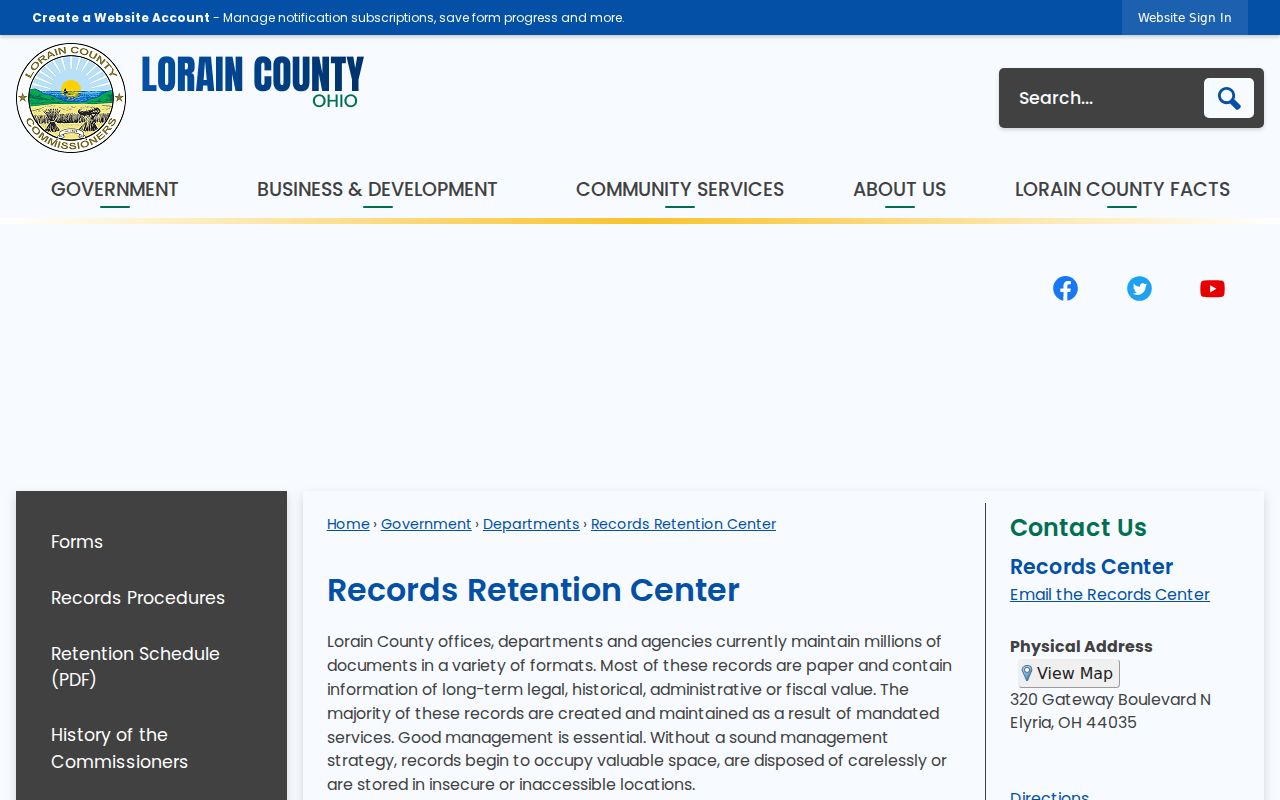
Bring the parcel and legal-description trail with you, because those anchors help staff distinguish one historic Elyria property from another.
Elyria Previous Residents in Directory Eras
Historic directories supply the household layer that deeds often lack. The Internet Archive holds C. S. Williams' 1859-60 Medina, Elyria & Oberlin directory and W. M. Lawrence & Co.'s 1914 Directory of the City of Elyria. The latter contains a complete census by streets as well as alphabetical entries. The Lorain County Chapter of the Ohio Genealogical Society identifies discrete leads for Elyria Phone Company directories in 1930, 1932-36, and 1938, and Elyria city directories for 1955 and 1959.
Use these as individual evidence points, not a seamless annual directory run. The 1955 Carl Jasinto lead describes residential listings, rural routes, Grafton, Wellington, and Avon. The 1959 lead includes residential listings and wider local-area coverage while expressly excluding Avon. EPLS Ohio Room can help with local directories, yearbooks, obituaries, maps, and microfilm in library use. The detailed holding and entry-reading information belongs in the Elyria City Directory resource.
Pair a directory line with a nearby census year, a parcel or deed record, an obituary, and an estate record where appropriate. Census schedules identify a household on an enumeration date. Directory spellings, initials, and even street numbers may vary. A single listed line is a lead to test, not a continuous biography.
Elyria Previous Residents and the 1914 Number Warning
The 1914 street census is valuable because it orders streets alphabetically, identifies intersections, and places dated household information at an address. It also gives a local warning that prevents many false dead ends: when two street numbers appear, the parenthetical one may be a displayed but incorrect number. The book says odd and even sides generally fall on opposite sides as a street proceeds from its beginning.
Do not assume a citywide renumbering just because an old and modern number differ. No authoritative Elyria citywide renumbering date was found. Preserve both printed numbers, intersections, parcel information, and legal description. Historic and retired GIS layers, the retention microfilm, and an address-assignment inquiry to Elyria Engineering are the better ways to resolve a specific discrepancy.
Note: A parenthetical directory number is a prompt for comparison, not enough evidence to merge two Elyria properties.
Elyria Previous Residents: Census and Obituaries
Household evidence must be dated. After locating a directory year, compare it with a federal census available under the 72-year release rule, then check newspaper, cemetery, and probate material around a known move, death, or estate date. Elyria Public Library System's Ohio Room is an in-library local-history resource at the West River Branch. It holds county histories, atlases, cemetery records, yearbooks, obituary indexes, microfilm, and licensed databases. Its newspaper partner route accepts focused obituary requests with a decedent name and, when known, the newspaper, date, and page.
The City cemetery department maintains municipal cemetery records and provides a Brookdale burial-search entry point. A burial or obituary can establish a historical event or memorial association. It does not reveal a living relative's current location. Probate is the next official route for a dated estate trail: Lorain Probate says its court records reach to 1824 and its online probate-related records begin in 1990.
Use the Brookdale burial-search page as a complementary endpoint for an Elyria previous-residents timeline.
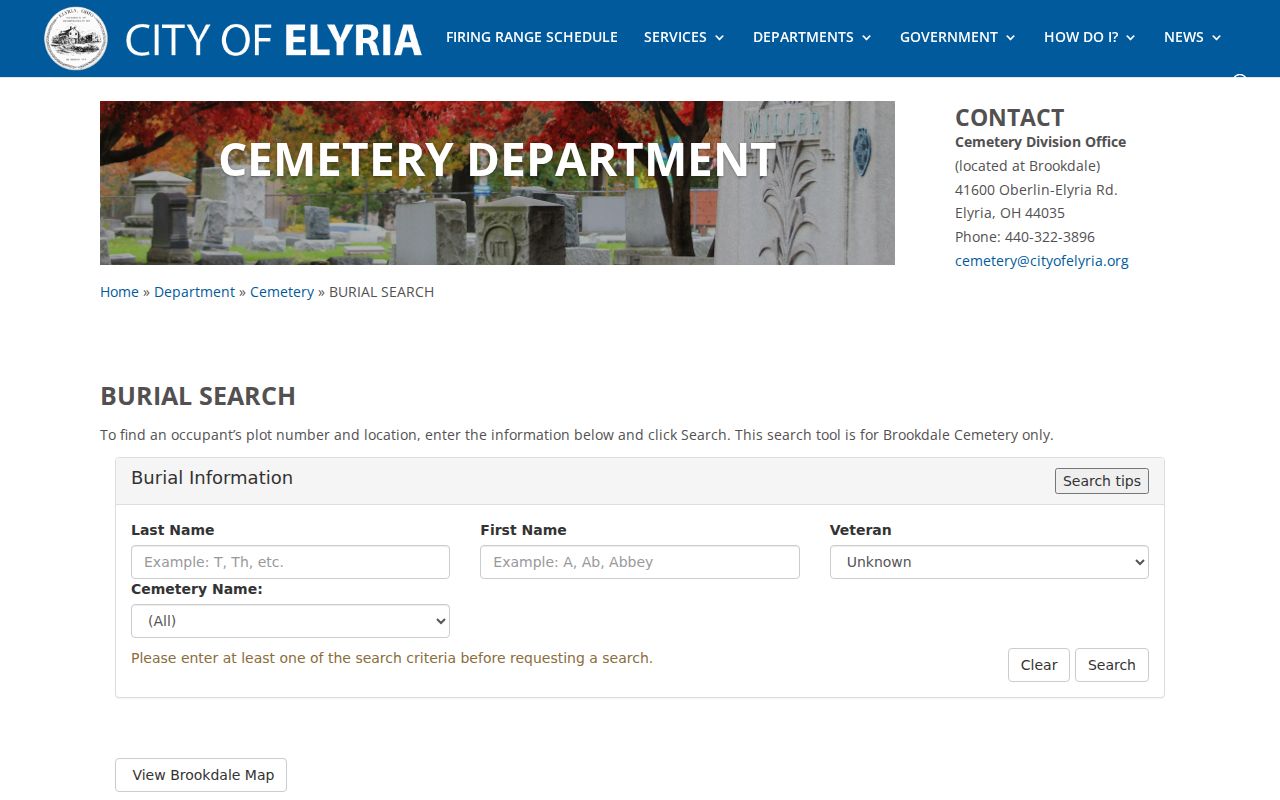
The burial-search route supports a dated historical question and should be paired with an obituary, directory, parcel, or probate source before a household connection is treated as reliable.
Elyria Previous Residents and Naturalization Files
Historical naturalization can add a name-change or residence-era lead to an Elyria house history. Lorain County transferred historical naturalization material to Ohio History Connection in January 2021. The County identifies foreign-national indexes and petitions from 1853-1985, petitions from 1906-1986, declarations from 1853-1968, and other defined series. It is a family-history resource, not an all-residents database and not an address locator.
The Lorain County naturalization records page identifies the transfer and archival route.
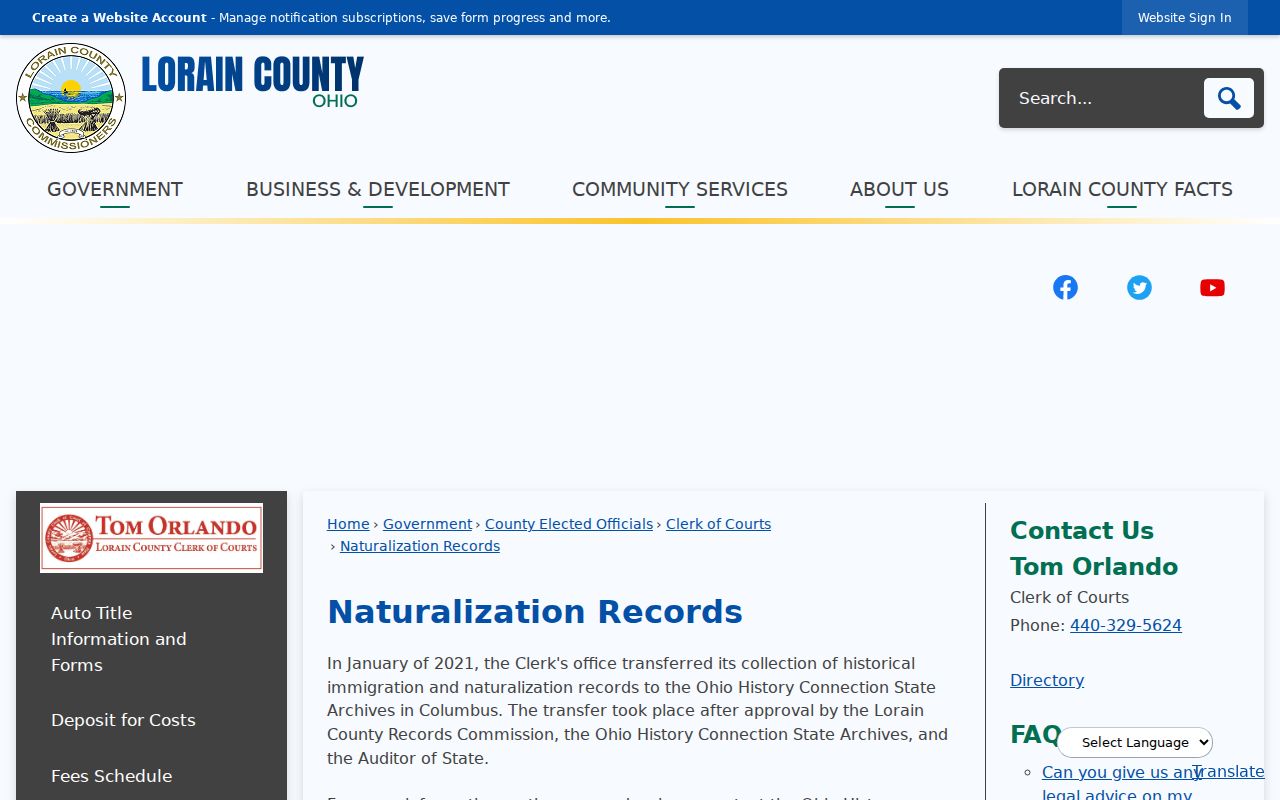
Use a naturalization date or name variant to sharpen a library, archive, deed, or census search, then keep the evidence tied to its original record and date.
Elyria Previous Residents Privacy Limits
A previous-residents search is strongest for house history, family history, estate research, and understanding a dated property trail. It has real limits. Owners and occupants can differ. A directory can be incomplete or approximate. Court and adoption records can be sealed, protected voters are omitted from public voter material, and a probate caption does not give a current address for an heir. Never use an old record to reconstruct a confidential location.